






Comparison of stainless steel screw anti-loosening technology: double nut, thread glue or nylon washer?
In mechanical assembly and engineering applications, the anti-loosening problem of stainless steel screws has always been the focus of engineers and technicians. Loose screws will not only affect the normal operation of the equipment, but may also cause serious safety accidents. In response to the anti-loosening needs of stainless steel screws, there are currently three main mainstream solutions on the market: double nut anti-loosening, thread glue fixation and nylon washer locking. This article will comprehensively compare these three technologies from the aspects of anti-loosening principle, applicable scenarios, advantages and disadvantages, etc., to help you choose the most suitable anti-loosening solution.
1.Double nut anti-loosening technology: a classic solution for mechanical anti-loosening
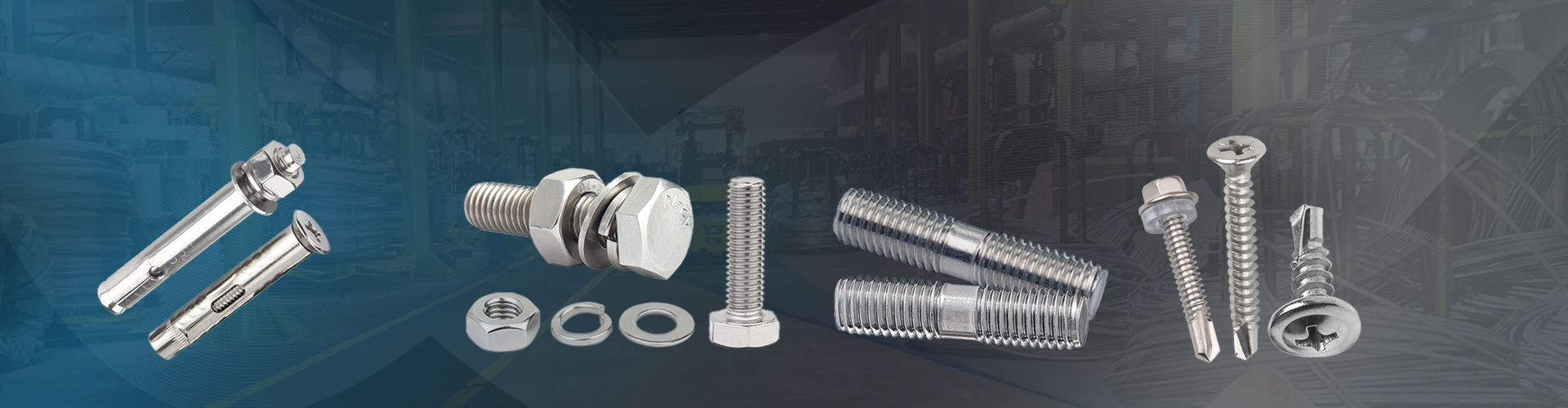
Double nut anti-loosening is a long-standing and widely used mechanical anti-loosening method. Its working principle is to lock the upper and lower nuts together and use the friction between the nuts to produce an anti-loosening effect. In specific operations, first tighten the first nut to the specified torque, and then screw on the second nut, and lock it through the interaction force between the two nuts.
The main advantages of this anti-loosening method are its high reliability, reusability and no need for additional materials. For parts that need to be disassembled frequently or equipment in a vibrating environment, double nuts provide stable anti-loosening performance. Especially in high temperature environments, double nuts are particularly good at preventing loosening, and will not fail due to high temperature like other anti-loosening materials.
However, double nuts also have obvious shortcomings. First, it increases the assembly space and weight, which is not friendly to lightweight designs with limited space. Secondly, installation requires higher skills, and improper tightening sequence and torque control of the two nuts will affect the anti-loosening effect. Finally, loosening may still occur in a long-term vibration environment, requiring regular inspection and maintenance.
2.Thread glue anti-loosening technology: a precise solution for chemical bonding
Thread glue is an advanced technology that achieves anti-loosening through chemical bonding. This special adhesive is applied to the thread and forms a strong bonding layer after curing, which effectively prevents the screw from loosening. According to different strengths, thread glue can be divided into three types: low strength, medium strength and high strength to meet different disassembly needs.
The outstanding advantage of thread glue is that it has excellent anti-loosening effect, can evenly fill the thread gap, and is suitable for screws of various complex shapes and sizes. It hardly adds any volume and weight, and is particularly suitable for precision equipment with limited space. In addition, thread glue also has a sealing and anti-corrosion function, which can effectively prevent moisture and corrosive media from invading the threaded connection.
However, this technology also has limitations. Disassembly is relatively difficult, especially when using high-strength thread glue, which may require heating or special solvents. Curing takes time and cannot bear loads immediately. Ambient temperature and humidity will affect the curing effect, and it is not suitable for extremely high temperature environments (generally the temperature resistance range is between -50℃ and 150℃). In addition, the one-time use characteristics also increase maintenance costs.
3.Nylon washer anti-loosening technology: an innovative choice for elastic locking
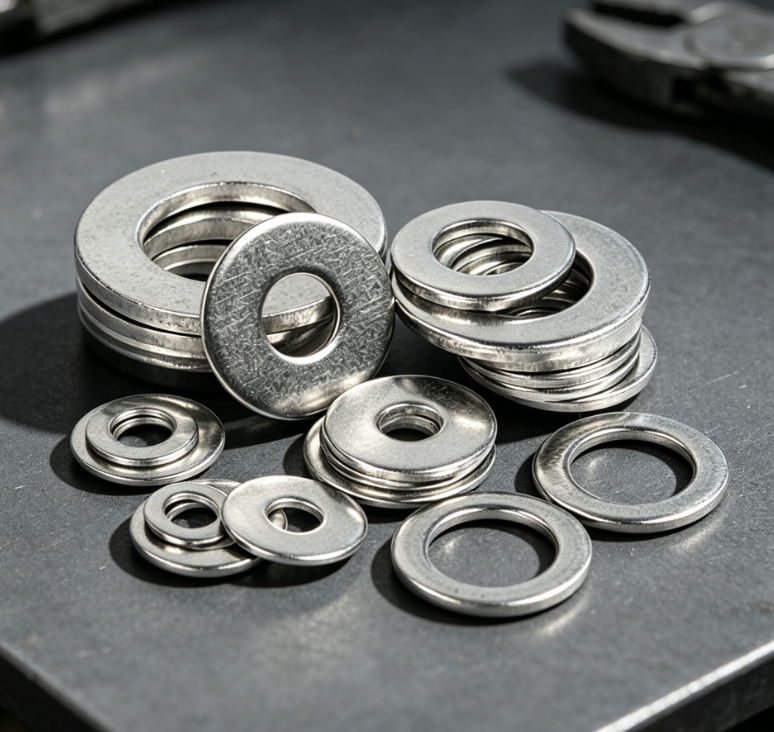
Nylon anti-loosening washers (also known as nylon insert locking nuts) are anti-loosening through the elastic deformation of the nylon ring inside the washer and the thread. When the screw is screwed in, the nylon material is squeezed and deformed, generating a continuous rebound force, thereby maintaining the friction between the threads to prevent loosening.
The biggest feature of this technology is that it is easy to install and can be used like ordinary nuts without special tools or processes. The elasticity of the nylon material provides a continuous anti-loosening force and can compensate for the loosening caused by thread wear. Unlike direct contact with metal, nylon washers can also reduce thread wear and extend the service life of screws. At the same time, it has certain sealing and insulation properties.
However, the temperature resistance of nylon washers is limited. Generally, it is only suitable for environments between -40℃ and 120℃. High temperature will cause nylon to soften and lose its anti-loosening effect. In a long-term vibration environment, nylon may experience "cold flow" and gradually lose its elasticity. In addition, the anti-loosening performance will decrease after multiple disassembly, and it is usually recommended to replace new washers.
4.How to choose the most suitable anti-loosening solution?
When choosing the anti-loosening technology for stainless steel screws, the following factors need to be considered comprehensively:
Use environment: double nuts are preferred in high temperature environments; thread glue is more advantageous in corrosive environments; nylon washers are more suitable if insulation or sealing is required.
Disassembly frequency: double nuts or low-strength thread glue are suitable for frequent disassembly occasions; medium- and high-strength thread glue can be selected for permanent or semi-permanent fixation.
Space limitations: avoid double nuts in small spaces; thread glue may only be selected for ultra-thin designs.
Cost considerations: mass production focuses on unit cost; maintenance and repair consider long-term use costs.
Vibration intensity: In a strong vibration environment, the three solutions can be used in combination, such as the composite anti-loosening method of "thread glue + nylon washer".
As a professional stainless steel fastener solution provider, our company can recommend the best anti-loosening technology combination according to your specific application scenarios and needs. Our engineering team has rich field experience and can help you solve various complex screw anti-loosening problems.
5. Why choose our anti-loosening solution?
Professional technical support: Our engineering team can provide full-process technical support from selection to installation to ensure the maximum anti-loosening effect.
Customized service: For special working conditions, we can provide customized anti-loosening solutions, including the application of composite anti-loosening technology.
Quality assurance: All anti-loosening products have passed strict vibration tests and durability tests to ensure stable performance in various harsh environments.
Cost optimization: We not only provide products, but also provide overall solutions to help you optimize costs while ensuring anti-loosening effects.
After-sales tracking: We have established a complete after-sales tracking system, regularly visit to understand the use of products, and solve possible problems in a timely manner.
No matter what stainless steel screw locking challenge you face, we can provide the most suitable solution. Contact our technical consultants now to get locking solution recommendations for your specific application, so that your equipment can say goodbye to the trouble of screw loosening and operate more safely and reliably.
