

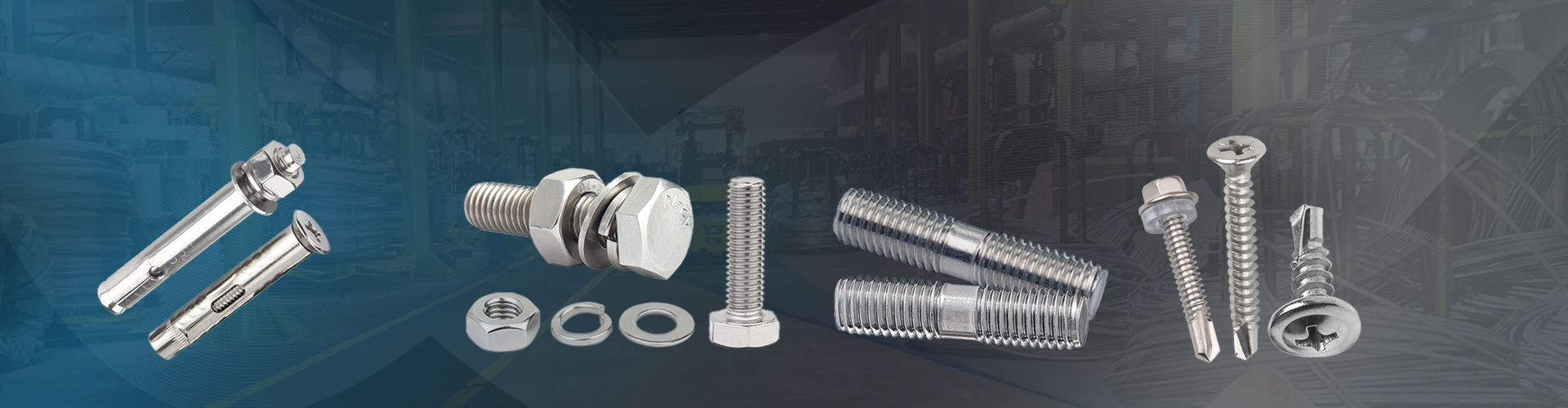




How to choose cost-effective stainless steel fasteners under the new EU and US tariff policies?
In recent years, the EU and the US have continuously adjusted the import tariff policies for stainless steel fasteners, resulting in a significant increase in costs for many buyers. As a professional manufacturer of stainless steel screws, bolts and nuts with 20 years of export experience, we are well aware of the impact of tariff changes on your purchasing plans. This article will analyze the latest policies for you and provide practical suggestions to help you purchase cost-effective, compliant and reliable stainless steel fasteners in a complex trade environment.
1.The impact of the new tariff policy on stainless steel fasteners
1.The latest EU tariff adjustment
The EU imposes an anti-dumping duty of 22.1%-30% on some Chinese-made stainless steel fasteners (such as stainless steel screws, bolts, and nuts), especially for 304 and 316 stainless steel products. This means that if you still import directly from China, the cost may increase significantly.
But please note: not all products are affected. Some fasteners with special specifications or re-exported through ASEAN countries (such as Vietnam and Malaysia) can still enjoy lower tariffs.
2. Changes in US import tariffs
The United States has imposed an additional tariff of 7.5% on some stainless steel products (such as 316 stainless steel bolts), and has also strengthened its review of origin. If your supplier cannot provide a compliant certificate of origin, it may face customs clearance delays or additional fines.
Is your purchase affected?
Free tariff assessment: Simply provide your product specifications and export country, and we will analyze the tariff impact for you within 24 hours and recommend the best procurement plan. Consult now
2. How to choose compliant and cost-effective stainless steel fasteners?
1.Material selection: balance performance and cost
304 stainless steel (A2-70): Suitable for general environments, cost-effective, but EU tariffs are high.
316 stainless steel (A4-80): Stronger corrosion resistance, suitable for chemical and marine engineering, relatively low tax rate.
Low-tariff alternatives: such as 430 stainless steel or 304 products produced in Southeast Asia, which can effectively reduce costs.
Our advice: If you are not sure which material best suits your needs, we can provide free sample testing to ensure that performance meets the standards while optimizing procurement costs.
2.Supplier qualifications: avoid customs clearance risks
Many buyers have had their goods detained due to incomplete supplier qualifications. When choosing a supplier, please be sure to confirm:
ISO 9001 certification (to ensure a reliable quality management system)
RoHS/REACH compliance (to meet EU environmental protection requirements)
Complete proof of origin (to avoid tariff disputes)
Our advantages:
1.20 years of export experience, familiar with European and American customs regulations
2.Provide a full set of compliance documents (including material certification, test reports)
3.Support Vietnam's re-export trade and reduce tariff costs
3.Procurement strategy optimization: long-term cooperation saves more money
Bulk purchase discounts: the larger the order volume, the lower the unit price
Long-term framework agreement: lock in preferential prices to avoid market fluctuations
Bonded warehouse stocking: shorten delivery cycle and reduce logistics risks
3.Why choose us?
1.Professional team, full support
From material selection, tariff optimization to export customs declaration, we provide one-stop service to ensure your procurement process is smooth and worry-free.
2.Flexible supply to deal with trade barriers
We have production bases in China and Vietnam, and can provide the best tariff plan according to your needs.
3.Transparent quotation, no hidden fees
We provide detailed cost analysis, including materials, production, tariffs and logistics costs, so that you can clearly understand every expenditure.
