





Detailed Explanation of Screw Head Types: Choosing the Right Screw Head to Meet Your Engineering Needs
Detailed Explanation of Screw Head Types: Choosing the Right Screw Head to Meet Your Engineering Needs
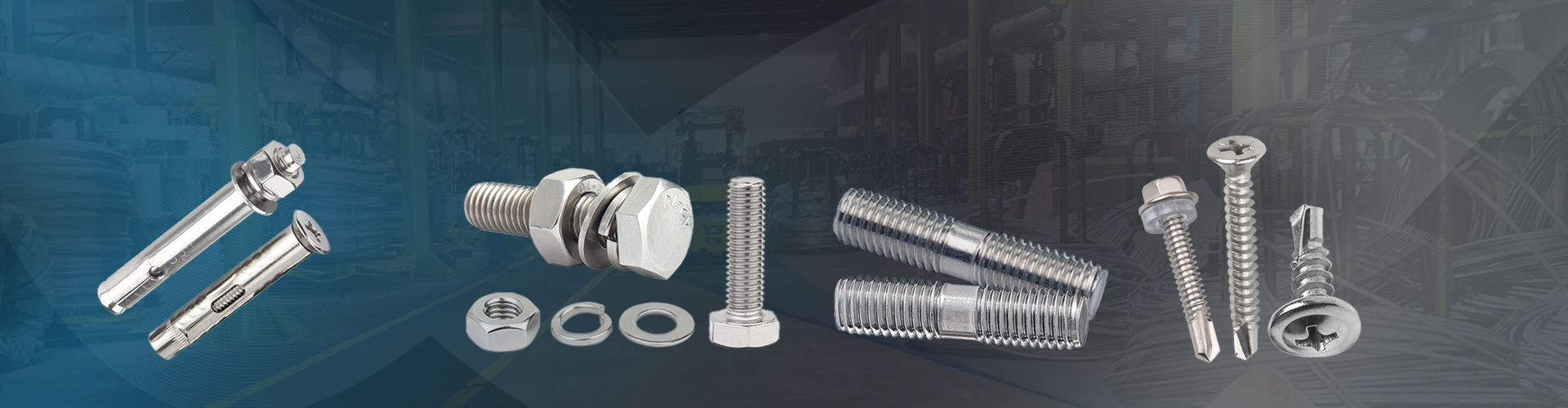
The selection of screw head types is crucial for ensuring the smooth progress of engineering projects. Different types of screw heads are suitable for various applications and tool requirements. Here’s an overview of some common screw head types and their characteristics to help you choose the right one for your engineering needs.
- Slotted Head Screws
Characteristics: The screw head has a flat slot, suitable for use with a flat-head screwdriver.
Advantages: Simple to use and low manufacturing cost.
Disadvantages: Prone to slippage, low torque transfer efficiency, not suitable for high-demand applications.
- Phillips Head Screws
Characteristics: The head has a cross-shaped slot, suitable for use with a Phillips screwdriver.
Advantages: Provides better torque transfer, reduces slippage.
Disadvantages: May experience "cam-out" under high torque applications.
- Hex Head Screws
Characteristics: Hexagonal screw head, typically requires a wrench or hex screwdriver.
Advantages: Suitable for high torque applications, high strength, widely used in mechanical and construction industries.
Disadvantages: Requires more space for installation, limited tool options.
- Allen Head Screws (Hex Socket)
Characteristics: The head has an internal hexagonal socket, requiring an Allen wrench.
Advantages: Compact design suitable for tight spaces, can withstand high torque.
Disadvantages: Can be difficult to replace if the tool is damaged.
- Torx Head Screws
Characteristics: The head features a star-shaped slot, suitable for use with a Torx screwdriver.
Advantages: Provides excellent torque transfer, reduces slippage, suitable for precision applications.
Disadvantages: Higher tool cost, may be less common.
- Nut Head Screws
Characteristics: The head is shaped like a nut, typically used in conjunction with a bolt.
Advantages: Suitable for specific fastening needs, can provide strong connections.
Disadvantages: Requires additional tools for installation.
- Self-tapping Screws
Characteristics: The head design allows it to penetrate materials without pre-drilling.
Advantages: Saves time and materials; ideal for plastics or thin metals.
Disadvantages: May reduce connection strength when used on hard materials.
Selection Recommendations
When choosing the right screw head, consider the following factors:
Materil: Select the appropriate screw head type based on the material to be connected (e.g., wood, metal, plastic).
Torque Requirements: Determine the required torque to select the appropriate head type.
Space Limitations: Consider the size of the working space and choose a suitable screw head type.
Tool Availability: Ensure you have the appropriate tools for installing and removing the chosen screws.
By understanding these screw head types and their applications, you will be better equipped to meet the demands of your engineering projects, ensuring efficiency and quality in your work.