






How to choose high-performance fasteners? Material, process and scene matching skills
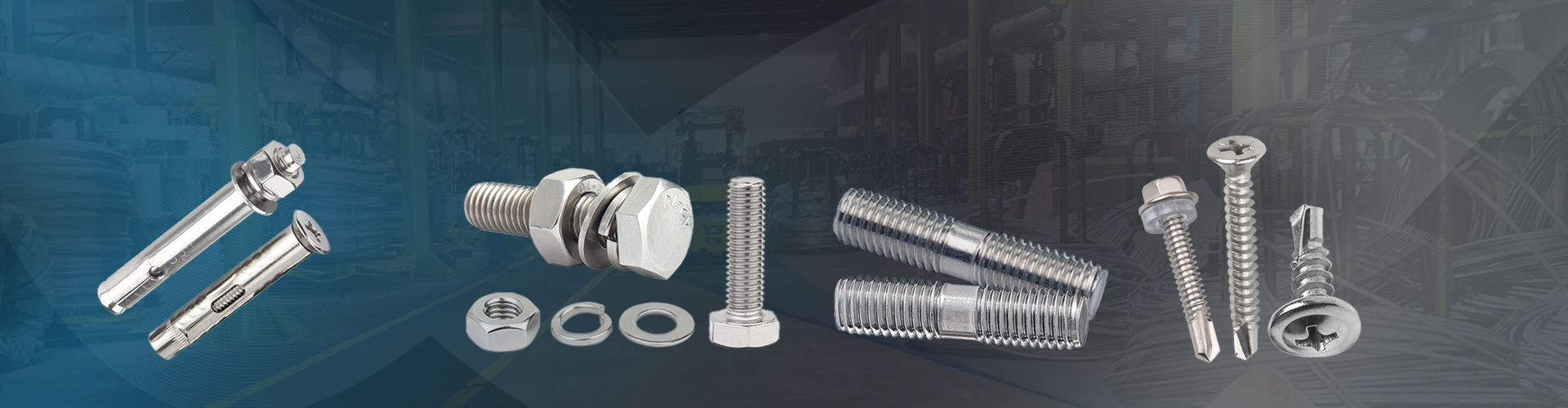
In modern industry, the selection of fasteners is crucial, which directly affects the safety, reliability and durability of mechanical structures. However, there are many types of fasteners on the market, and how to choose high-performance fasteners has become an important issue faced by many engineers and purchasers. This article will explore how to choose high-performance fasteners from the aspects of materials, processes and scene matching.
1.Material selection
1.1 Common materials and their characteristics
Carbon steel: high strength, low cost, but poor corrosion resistance, suitable for dry environments.
Stainless steel: strong corrosion resistance, suitable for humid or corrosive environments, but relatively high cost.
Alloy steel: by adding alloy elements, the performance of the material is enhanced, suitable for applications with high loads.
Plastic: light, corrosion-resistant, suitable for insulation or occasions that do not need to bear high stress.
1.2 Material matching skills
When selecting materials, the following factors need to be considered:
Working environment: such as humidity, salt spray, high temperature, etc., choose corresponding corrosion-resistant or high-temperature resistant materials.
Load requirements: Choose the appropriate material type according to the tension, shear force, etc. that the fastener needs to withstand.
Weight limit: In some occasions where lightweight requirements are required, try to choose lightweight materials (such as plastics or aluminum alloys).
2.Process selection
2.1 Fastener production process
Cold forging: Suitable for mass production, can improve the strength and toughness of the material.
Heat treatment: Improve the hardness and strength of the material through heating and cooling processes, especially suitable for fasteners that bear heavy loads.
Machining: Used in the production of precision fasteners, can achieve high dimensional accuracy and good surface quality.
2.2 Process matching skills
When selecting fasteners, it is necessary to consider the impact of its production process on performance:
Strength requirements: In high-load applications, heat-treated fasteners should be selected.
Accuracy requirements: In occasions where strict dimensional and geometric tolerances are required, mechanically processed fasteners are given priority.
Cost control: For mass production, cold forging can be selected to reduce costs while ensuring performance.
3.Scenario Matching
3.1 Application Scenario Analysis
Different application scenarios have different requirements for fasteners, for example:
Construction engineering: heavy loads are required, and high-strength alloy steel fasteners are usually selected.
Automotive industry: lightweight and high strength are required, and high-strength steel or aluminum alloy fasteners are often used.
Electronic equipment: focus on insulation performance, plastic or stainless steel fasteners are a better choice.
3.2 Scenario Matching Tips
When selecting fasteners, the following points should be considered:
Load properties: understand the static load, dynamic load and impact load to be borne, and select suitable fasteners.
Environmental factors: such as temperature, humidity, chemical media, etc., select corresponding corrosion-resistant and high-temperature resistant materials.
Service life: according to the frequency of use and maintenance cycle, choose wear-resistant and fatigue-resistant high-performance fasteners.
Selecting high-performance fasteners is not a simple matter, and it requires comprehensive consideration of materials, processes and application scenarios. By understanding the material properties, mastering the production process and analyzing the specific application scenarios, you can more effectively select suitable fasteners to ensure the safety and stability of the mechanical structure. During the selection process, it is recommended to communicate with professional manufacturers or suppliers to obtain more technical support and suggestions so as to make a more informed decision.
