


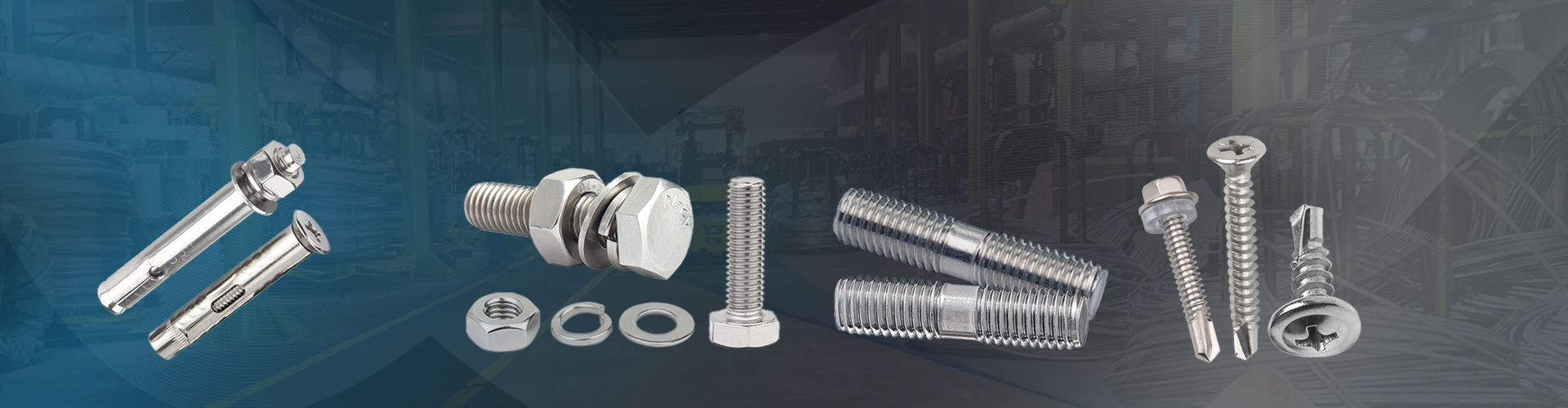




High-strength bolts vs. ordinary bolts: Which one is more suitable for your application scenario?
In the world of mechanical connections, bolts play a vital role. However, faced with a wide variety of bolts, how to choose the product that best suits your application scenario has become a difficult problem. This article will explore the differences between high-strength bolts and ordinary bolts in depth and help you make a wise choice.
1. Strength and performance:
High-strength bolts: As the name suggests, high-strength bolts have a higher strength grade and are usually subjected to processes such as heat treatment to improve their tensile strength, yield strength and fatigue resistance. This means that they can withstand greater loads and more demanding working environments, such as bridges, buildings, heavy machinery and other fields.
Ordinary bolts: Ordinary bolts have a relatively low strength grade and are suitable for connections under general loads and ordinary environments, such as furniture assembly, electrical appliance installation, etc.
2. Materials and processes:
High-strength bolts: Usually made of high-quality alloy steel, and undergo heat treatment processes such as quenching and tempering to obtain higher strength and hardness. In addition, the surface treatment of high-strength bolts is also more particular, such as galvanizing, Dacromet, etc., to improve their corrosion resistance.
Ordinary bolts: Generally made of carbon steel or low alloy steel, the production process is relatively simple and the cost is low.
3. Application scenarios:
High-strength bolts: Suitable for connections under high loads, impact loads, fatigue loads and harsh environments, such as:
1. Large steel structures such as bridges and buildings
2. Heavy machinery and mining equipment
3. New energy equipment such as wind power and nuclear power
4. High-end equipment such as aerospace and rail transit
Ordinary bolts: Suitable for connections under general loads and ordinary environments, such as:
1. Furniture, electrical appliances, hardware products
2 .Mechanical equipment, automotive parts
3. Non-load-bearing structures in construction projects
4. Selection suggestions:
Safety first: For connections involving personal safety or important equipment safety, be sure to choose high-strength bolts to ensure the reliability and safety of the connection.
Economic considerations: On the premise of meeting the use requirements, choose products with higher cost performance to avoid excessive pursuit of high strength and cost waste.
Professional consultation: If you have any questions about the choice of bolts, it is recommended to consult a professional fastener supplier or engineer for more professional advice.
5. Summary:
High-strength bolts and ordinary bolts each have their own characteristics and scope of application. Choosing the right type of bolt can not only ensure the reliability of the connection, but also effectively reduce costs. I hope this article can help you better understand the difference between high-strength bolts and ordinary bolts, and choose the most suitable product for your application scenario.
