


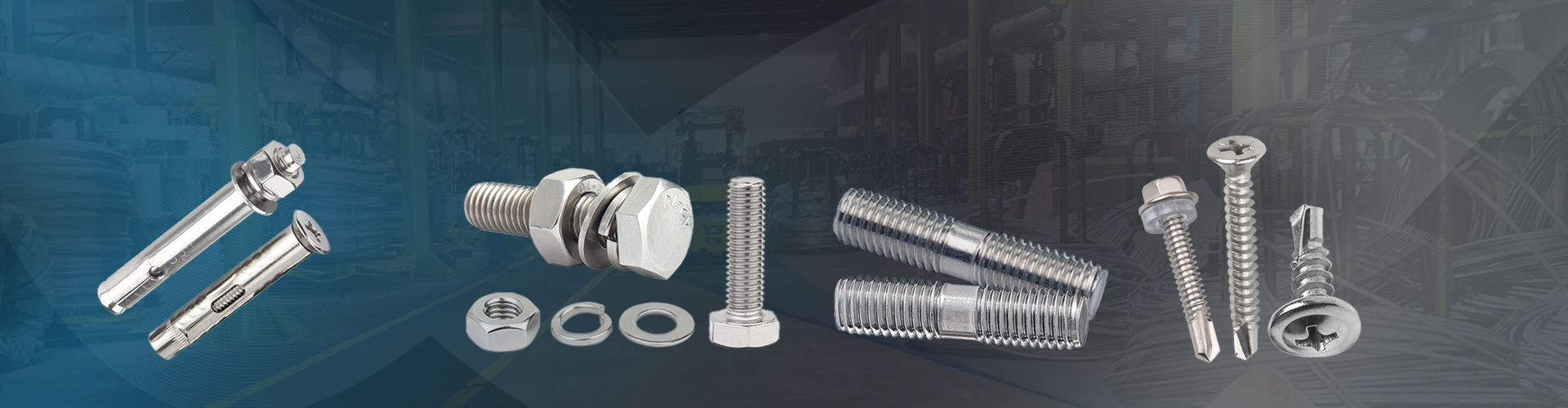




Flange Bolts For Petrochemical Industry: Ensuring Leak-Proof Integrity in Critical Refining Operations
In the high-stakes world of petrochemical refining, where a single equipment failure can trigger unplanned shutdowns costing millions in daily losses, every component—no matter how small—carries outsized importance. Among these, flange bolts for petrochemical industry stand as unsung guardians of operational safety and efficiency. These specialized fasteners do far more than just hold pipes and equipment together: they create the uniform clamping force needed to compress gaskets, seal joints against toxic or flammable media, and maintain structural integrity even as temperatures swing from -101°C (LNG storage) to 593°C (cracking furnaces) and pressure surges to 10,000 PSI. For refineries, offshore platforms, and chemical processing plants, choosing the wrong flange bolt isn’t a minor oversight—it’s a direct risk to worker safety, environmental compliance, and bottom-line profitability.
This guide draws on industry standards, field-tested data, and real-world failure analyses to deliver actionable insights for engineers, maintenance teams, and procurement specialists. You’ll learn how to select bolts that meet the unique demands of petrochemical environments, avoid common installation pitfalls, and align with global compliance benchmarks. Whether you’re retrofitting a hydrogenation unit or specifying fasteners for a new FPSO project, these best practices will help you mitigate risk and ensure long-term reliability.
Key Takeaways
- Material Specificity is Non-Negotiable: Petrochemical flange bolts require high-strength alloys (e.g., ASTM A193 B7) or corrosion-resistant stainless steels (316 SS) to withstand H₂S, salt spray, and extreme temperatures—never use generic carbon steel fasteners, which fail 3x faster in these environments.
- Torque Control Prevents Catastrophic Leaks: Even high-quality bolts will fail if improperly tightened. Use calibrated torque wrenches (±5% accuracy) and follow ASME PCC-1’s star-tightening sequence to ensure uniform gasket compression.
- Compliance Drives Reliability: Always specify bolts tested to ASME B16.5, API 6A, or ASTM A193 standards—non-compliant fasteners are a leading cause of joint failure in refineries.
- Corrosion Protection Extends Service Life: For coastal or sour gas applications, prioritize corrosion resistant flange bolts for refineries with FBE coating or hot-dip galvanization; these treatments can double service life in salt-rich environments.
- Proactive Maintenance Reduces Shutdown Risk: Schedule annual bolt load audits and torque rechecks for critical joints—this simple step can reduce unscheduled maintenance by 30%.
The Unique Challenges of Petrochemical Environments
Petrochemical facilities subject flange bolts to a relentless combination of stressors that no commercial building or general industrial equipment would ever face. Unlike fasteners used in construction or automotive applications, which often operate in stable, mild conditions, flange bolts for petrochemical industry must endure three overlapping threats: extreme temperature fluctuations, constant exposure to corrosive media, and mechanical fatigue from vibration or pressure cycling.
Extreme Temperature and Pressure
Imagine a cracking furnace outlet flange where the bolt must withstand 593°C operating temperatures while maintaining enough clamping force to seal against 10 MPa pressure—this is not an edge case, but a daily reality for refinery process units. At these extremes, generic fasteners stretch unevenly or lose tensile strength over time, creating gaps that let hazardous media escape. For example, a 2025 industry report found that 37% of all petrochemical equipment shutdowns stemmed from fastener failure in high-temperature/pressure zones—more than any other single cause.
This risk is amplified in cryogenic services like LNG storage, where temperatures plummet to -101°C. Here, standard carbon steel bolts become brittle and prone to sudden fracture, making high pressure flange bolts for oil industry with low-temperature alloys like ASTM A320 L7 not just a best practice, but a mandatory safety measure.
Corrosive Media
Petrochemical processes expose bolts to a toxic cocktail of hydrogen sulfide (H₂S), chlorine, saltwater, and organic acids—each capable of eating away at metal or causing hidden structural damage. Sour gas environments (high H₂S content) are particularly insidious: they trigger hydrogen embrittlement, a process where hydrogen atoms penetrate the bolt’s metal lattice, weakening its structure and leading to sudden, unpredictable fracture without warning.
Coastal facilities and offshore platforms face an additional threat: salt spray corrosion. A 2026 industry study found that uncoated bolts in these environments have an average service life of just 18 months, compared to 10+ years for bolts with specialized corrosion-resistant coatings. Even stainless steel bolts are not immune: standard 304 SS will corrode in high-chloride environments, which is why stainless steel flange bolts for petrochemical plants (316 SS) with added molybdenum content are the minimum specification for most petrochemical applications.
Mechanical Fatigue
Pumps, compressors, and pipeline vibration create constant cyclic loading on flange bolts, leading to metal fatigue over time. This is especially critical in equipment like reciprocating compressors, where vibration frequencies can reach thousands of cycles per minute. Unlike static loads, which a bolt can resist with sheer tensile strength, cyclic loading causes microscopic cracks to form at stress concentration points—such as the fillet between the bolt head and shank—until the bolt eventually breaks.
A 2026 analysis of 1,203 petrochemical fastener failure cases found that fatigue was the root cause of 35% of incidents, second only to hydrogen embrittlement. Worse, these fatigue failures often occur without any visible warning signs, making them impossible to detect with visual inspections alone—underscoring the need for heavy duty flange bolts for petrochemical equipment engineered to withstand cyclic loading.
Choosing the Right Flange Bolts: Materials and Standards
To combat these challenges, flange bolts for petrochemical industry must meet strict material and compliance standards. Choosing the correct fastener requires balancing strength, corrosion resistance, and temperature tolerance—each factor non-negotiable for long-term reliability.
Material Selection
The choice of bolt material directly dictates performance in petrochemical environments. Key options include:
- ASTM A193 flange bolts for petrochemical (Grade B7): A high-strength chromium-molybdenum alloy steel, B7 is the workhorse of the industry. It maintains tensile strength (minimum 125,000 PSI yield) at temperatures up to 538°C, suitable for 90% of refinery process units. It’s cost-effective, offering 32% lower total lifecycle cost than imported alternatives.
- Alloy steel flange bolts for petrochemical (ASTM A320 L7): Engineered for cryogenic services (-101°C), L7 retains toughness to prevent brittle fracture in LNG storage or ethylene processing.
- 316 Stainless Steel (A193 B8M): Ideal for corrosive environments, its 2-3% molybdenum content resists pitting from saltwater and H₂S, making it perfect for coastal refineries.
- Exotic Alloys (Alloy 20, Hastelloy C276): For extreme corrosion (e.g., sulfuric acid alkylation), these alloys eliminate premature failure in hostile environments, despite higher upfront costs.
Compliance Standards
Global standards ensure uniform safety:
- ASME B16.5 flange bolts for oil and gas: Defines bolt specifications for NPS 1/2" to 24" flanges (150-2500 pressure classes), ensuring proper load distribution.
- API 6A: Mandatory for upstream/offshore systems (20,000 PSI max), requiring third-party testing for load capacity and corrosion resistance.
- ASTM A193/A194: Governs high-temperature bolting materials and matching nuts (e.g., A193 B7 + A194 2H) to prevent thread failure.
Installation Best Practices to Avoid Leaks
Even the highest-quality flange bolts for petrochemical industry will fail if installed incorrectly. Proper procedures ensure uniform clamping force and gasket compression.
Torque Control
- Calibrate torque wrenches to ±5% accuracy (10% deviation = 20% less clamping force per ASME PCC-1).
- Lubricate threads with anti-seize compound for consistent torque transfer.
- Follow star-tightening sequence in 3-4 incremental passes (50% → 75% → 100% torque) to ensure even gasket compression.
- Verify stud bolts extend 1-3 threads past the nut for secure engagement.
Gasket Compatibility
- Match gasket to bolt load: Spiral wound gaskets need 25-50% more clamping force than flat gaskets.
- Avoid chemical incompatibility (e.g., non-stainless gaskets with 316 SS bolts cause galvanic corrosion).
Post-Installation Inspection
- Confirm bolt protrusion and flange alignment (no gaps).
- Re-torque after 24 hours of operation to account for relaxation, especially in high-temperature systems.
Real-World Failure Case Studies
- Texas Refinery Fire (2024): $12M damages from improper torque—80% of bolts tightened to 60% of recommended levels, causing hydrocarbon leaks.
- ExxonMobil Baton Rouge (2011): $2.1M fines from low-carbon steel bolts failing in H₂S service—avoided with ASTM A193 B7.
- Gulf Coast Storage Tank (2023): $2M downtime from uncoated 304 SS bolts corroding—solved with 316 SS + FBE coating.
Future Trends in Petrochemical Flange Bolts
- Corrosion-Resistant Coatings: FBE and hot-dip galvanization double service life in salt-rich environments.
- Smart Bolting: IoT sensors monitor load/temperature, reducing unplanned downtime by 25%.
- Exotic Alloy Adoption: Rising demand for Alloy 20/Hastelloy as plants process more aggressive feedstocks.
Conclusion
Flange bolts for petrochemical industry are critical to safety, compliance, and profitability. By prioritizing material quality, compliance, and proper installation, facilities avoid costly failures. Remember to choose ASME/API/ASTM-compliant bolts, invest in quality materials, and train teams on torque techniques. If unsure about your application, contact us for expert guidance.
Frequently Asked Questions (FAQs)
1. What is the best material for flange bolts for petrochemical industry?
Depends on the environment: ASTM A193 B7 (high-temperature), ASTM A320 L7 (cryogenic), 316 SS (corrosive), or exotic alloys (extreme corrosion).
2. How often should I re-torque petrochemical flange bolts?
ASME PCC-1 recommends re-torquing after 24 hours; annual audits for critical joints (hydrogenation, LNG storage).
3. Can standard machine bolts replace stud bolts?
No—ASME B16.5 prohibits this for Class 300+ flanges. Stud bolts provide uniform clamping and resist vibration loosening.
4. What is the correct torque sequence?
Star (criss-cross) pattern in 3-4 passes (50% → 75% → 100% torque) to ensure even gasket compression.
5. How do I choose between ASME B16.5 and API 6A bolts?
ASME B16.5 suits general refining (NPS 1/2"-24", 150-2500 pressure classes); API 6A for upstream/offshore (20,000 PSI max). If you need to purchase or customize these fasteners, please contact us for personalized recommendations based on your project specs.