





316L Stainless Steel Expansion Bolts: Foundation Fixing in Chemical Plants, Resistant to Strong Acid and Alkali Corrosion
316L Stainless Steel Expansion Bolts: Foundation Fixing in Chemical Plants, Resistant to Strong Acid and Alkali Corrosion
In chemical production environments, the stable fixing of equipment faces severe corrosion challenges. Strong acids, strong alkalis, and various chemical media continuously corrode every connecting component. Ordinary fasteners often show severe corrosion or even complete failure within months. 316L stainless steel expansion bolts, with their superior corrosion resistance and reliable anchoring capabilities, have become the ideal choice for fixing foundations in chemical plants, providing long-term stable safety assurance for critical equipment.

I. 316L Material: The Material Basis for Coping with Strong Acid and Alkali Environments
316L stainless steel expansion bolts are made of low-carbon molybdenum-content austenitic stainless steel. The addition of 2-3% molybdenum to its chemical composition significantly enhances its resistance to pitting and crevice corrosion. In environments with concentrations up to 20% sulfuric acid, hydrochloric acid, and various alkaline media, the surface of 316L stainless steel expansion bolts can quickly form a stable passivation film, effectively resisting chemical corrosion. Compared with ordinary stainless steel, its corrosion resistance is more than twice that of ordinary stainless steel, making it particularly suitable for the acidic media contact environments commonly encountered in chemical plants. Meanwhile, its low carbon content (≤0.03%) prevents carbide precipitation during welding or high-temperature environments, completely avoiding the risk of intergranular corrosion.
II. Expansion Anchoring Structure: Achieving Reliable Mechanical Locking
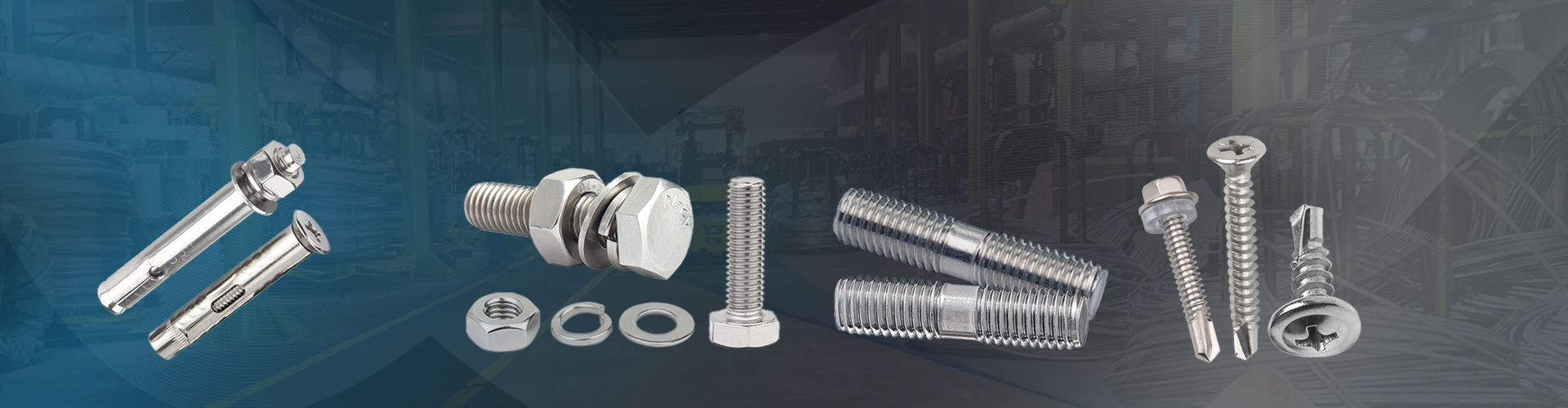
316L stainless steel expansion bolts utilize a precision-designed expansion sleeve structure. During installation, tightening the nut causes the tapered bolt to expand outward, tightly pressing the expansion sleeve into the concrete hole wall, forming a strong mechanical locking force. In C30 concrete, M12 316L stainless steel expansion bolts can achieve a tensile bearing capacity of over 15kN and a shear bearing capacity exceeding 12kN. This reliable anchoring performance ensures that chemical equipment will not experience displacement or vibration due to foundation loosening during long-term operation. It is worth noting that in chemical plant equipment foundations, although 316L material is more expensive than carbon steel 8.8 grade hexagonal bolts, its service life in corrosive environments can be extended by 5-8 times, resulting in a significant overall cost advantage. Carbon steel grade 8.8 hex bolts perform excellently in dry indoor environments, but in strong acid and alkali environments, 316L material must be selected to ensure safety.
III. Installation Adaptability: Suitable for various chemical foundation materials
Chemical plant equipment foundations include concrete, reinforced concrete, and foundation layers with special anti-corrosion treatments. The expansion structure design of 316L stainless steel expansion bolts fully considers the characteristics of different substrates. By adjusting the drilling diameter and installation torque, reliable anchoring effects can be achieved in various foundations. Its threads are high-precision rolled, ensuring a smooth fit and a stable installation torque coefficient, ensuring that each bolt receives consistent preload. During installation, it is recommended to use a torque wrench to strictly control the tightening torque to avoid overtightening, which could lead to substrate cracking or excessive deformation of the expansion sleeve. For special parts that need to connect to carbon steel equipment, insulating gaskets can be used to prevent electrochemical corrosion. This is a key point to note when using both 316L expansion bolts and carbon steel grade 8.8 hex bolts in chemical environments.
IV. Long-Term Corrosion Resistance: Meeting the Needs of Chemical Equipment Throughout its Life Cycle
The corrosion resistance of 316L stainless steel expansion bolts has been proven in numerous chemical projects. Within a wide pH range of 2-12, its annual corrosion rate is less than 0.01mm, meaning that even in the harshest chemical environments, its effective service life can reach over 20 years. Unlike galvanized bolts that require periodic replacement, 316L material fundamentally solves the corrosion problem, preventing equipment downtime and production safety accidents caused by bolt failure. The smooth surface of 316L stainless steel expansion bolts makes them resistant to chemical adhesion, easy to clean and maintain, and particularly meets the requirements of chemical enterprises for clean production and safe operation. The use of 316L stainless steel expansion bolts in critical components such as reactor foundations, storage tank anchoring, and pipe supports has become an industry standard.
V. High and Low Temperature Environmental Adaptability
Chemical production processes often involve extreme temperature conditions. 316L stainless steel expansion bolts maintain stable mechanical properties and corrosion resistance within a wide temperature range of -196℃ to 800℃. Its austenitic structure does not undergo a brittle transformation at low temperatures and maintains sufficient strength and oxidation resistance at high temperatures. This characteristic makes it suitable for fixing chemical equipment subject to drastic temperature changes, such as cryogenic storage tanks, high-temperature reactors, and steam pipelines. In practical applications, 316L stainless steel expansion bolts can be rationally matched with carbon steel grade 8.8 hexagonal bolts according to different temperature zones and corrosion conditions, optimizing cost structure while ensuring safety.
If you are looking for a reliable corrosion-resistant fixing solution for chemical plant equipment, please contact us. Aozhan Hardware can provide you with standard-compliant 316L stainless steel expansion bolts and professional selection support.