


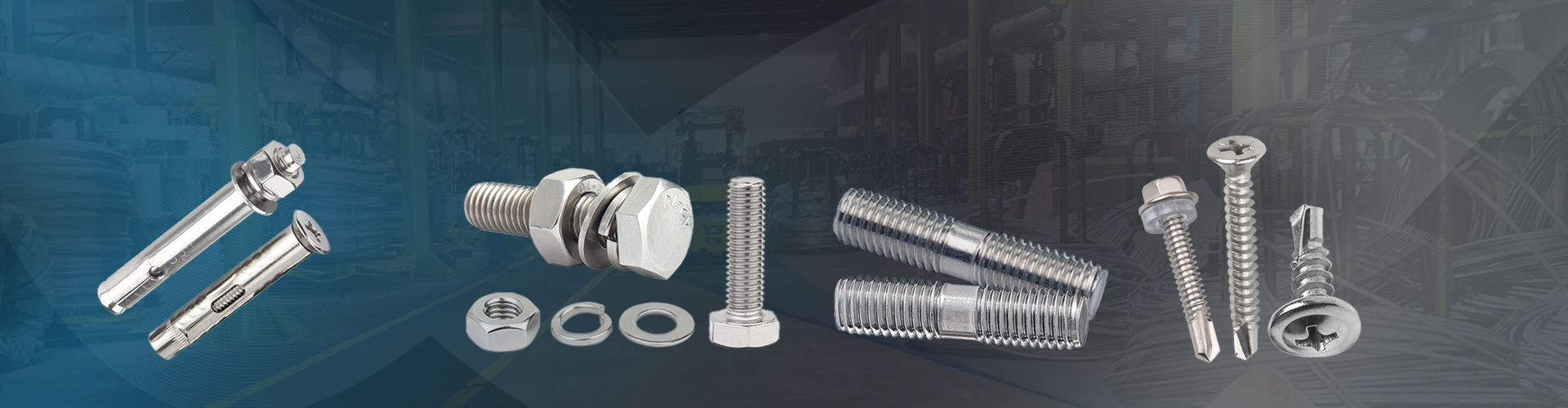




Advantages and Challenges of 310S Hex Bolts in Industrial Applications
In modern industry, bolts are increasingly used as connectors, particularly in high-temperature and high-corrosion environments. 310S hex bolts are favored for their unique properties. 310S stainless steel is a high-temperature and corrosion-resistant alloy material widely utilized in the petroleum, chemical, power, and other industries. This article delves into the advantages and challenges of 310S hex bolts in industrial applications.

Advantages
High-Temperature Resistance
The melting point of 310S hex bolts is as high as 1400°C, and they retain excellent mechanical properties in high-temperature settings. This makes them an ideal choice for connectors in high-temperature furnaces, heat exchangers, and other equipment.
Excellent Corrosion Resistance
Due to the high chromium and nickel content in 310S stainless steel, these bolts perform well in various corrosive media. For instance, in acidic and alkaline environments, 310S hex bolts are resistant to rust and corrosion, ensuring the safety and stability of the equipment.
Good Processing Performance
310S hex bolts are easy to process and form during production, accommodating diverse industrial requirements. This flexibility allows manufacturers to swiftly adapt to market changes
Strength and Toughness
With high tensile strength and toughness, 310S hex bolts can withstand significant loads and impacts. This makes them suitable for heavy-load and vibration environments.
Challenges
High Cost
Compared to ordinary carbon steel bolts, the production cost of 310S hex bolts is higher, potentially limiting their application in cost-sensitive projects.
Welding Difficulty
Although 310S stainless steel has good welding properties, the welding process demands precision. Improper welding can lead to brittle cracking in the weld.
Fierce Market Competition
With the widespread use of stainless steel materials, numerous alternatives have emerged in the market. Companies must continually innovate to maintain their competitive edge.
Environmental Sensitivity
Under specific conditions, such as chloride environments, 310S hex bolts may experience stress corrosion cracking. This requires careful consideration during design and material selection.
Conclusion
310S hex bolts have become crucial connectors in many industrial sectors due to their high temperature and corrosion resistance. However, their high cost and welding challenges cannot be overlooked. When opting for 310S hex bolts, companies should weigh the advantages and challenges to ensure optimal performance in specific applications.