






The same 304 stainless steel, why do our fasteners have 3000 more hours of salt spray test?
304 stainless steel is widely used in the fastener industry due to its good corrosion resistance and mechanical properties. However, in the salt spray test, the corrosion resistance of 304 stainless steel fasteners from different brands can vary greatly. Some products can only last for hundreds of hours, while our fasteners can pass more than 3000 hours of salt spray test. Why is this?
- Standards and significance of salt spray test
Salt spray test is a common corrosion resistance test method, usually using neutral salt spray (NSS) test to simulate the corrosion effects in marine or industrial environments. The longer the test time, the stronger the durability of the product in harsh environments.
Key factor 1: High purity 304 stainless steel material
Although 304 stainless steel is the industry standard, the material composition of different manufacturers may vary. Our fasteners are made of high-purity 304 stainless steel, and its main advantages include:
- Lower impurity content, reducing corrosion sources
- Accurate chromium-nickel ratio, improving oxidation resistance
- More stringent smelting and refining processes to ensure stability
Key factor 2: Advanced surface treatment technology
Ordinary 304 stainless steel fasteners usually only undergo basic pickling and passivation treatment, while our products use a multi-layer surface treatment process, including:
- Ultra-fine passivation: remove free iron and form a denser oxide layer
- Nano-level coating: further enhance corrosion resistance
- Special plating treatment: additional protective barrier, improve salt spray resistance
Key factor 3: Precision manufacturing process
The manufacturing process is crucial to the corrosion resistance of fasteners. Our production process optimization includes:
- Precision cold forging technology: reduce micro cracks and reduce the starting point of corrosion
- High temperature solution treatment: improve the corrosion resistance uniformity of materials
- Pollution-free production environment throughout the process: prevent surface pollution from affecting performance
- Comparison of test data and actual application cases
In actual tests, our 304 stainless steel fasteners performed well in the NSS salt spray test:
Ordinary 304 stainless steel fasteners: usually begin to corrode in 200-500 hours
Our 304 stainless steel fasteners: salt spray test for more than 3000 hours, still no obvious corrosion on the surface
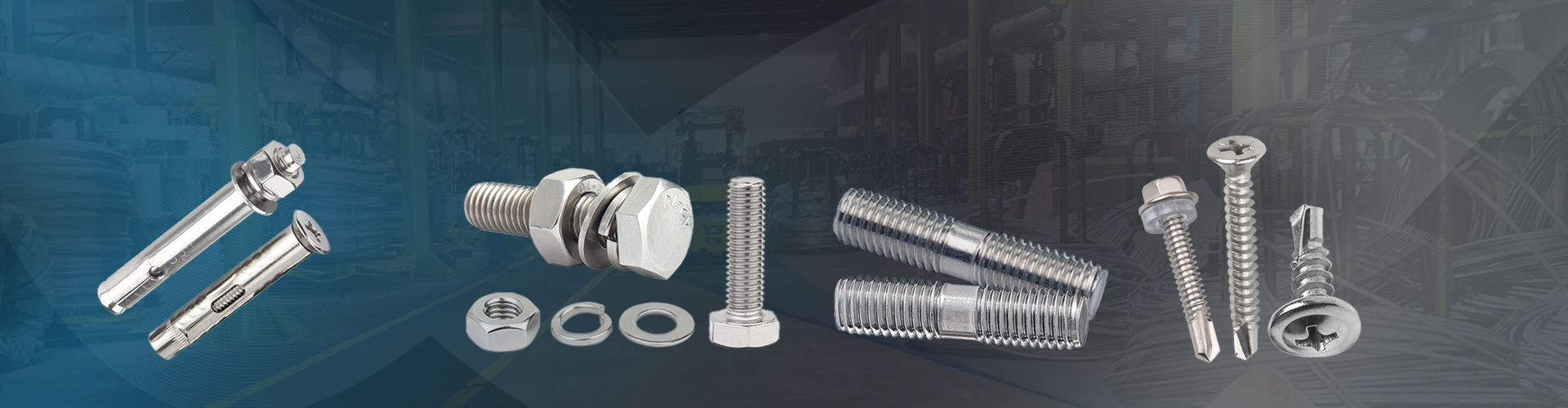
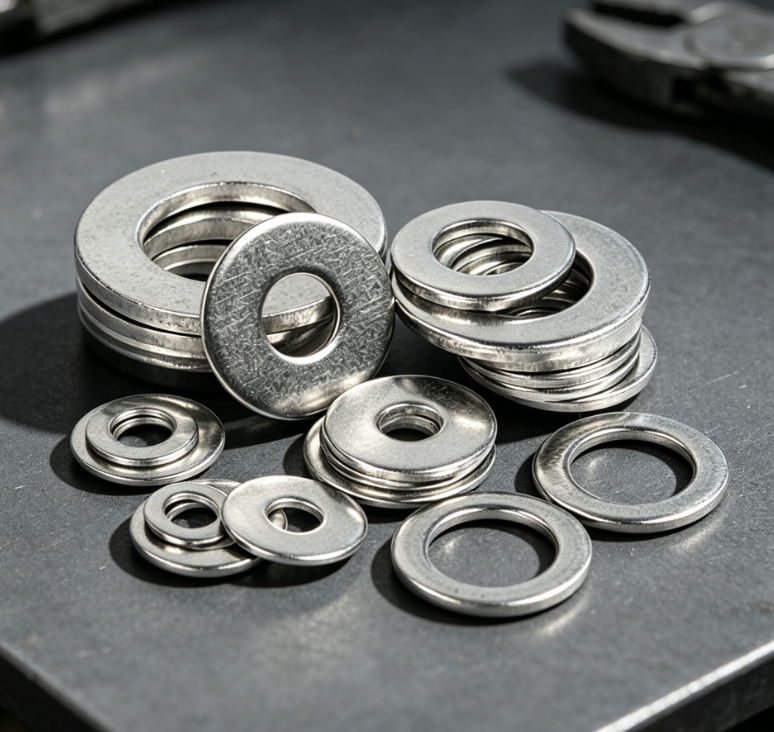
Our fastener products include 304 stainless steel hexagonal bolts, flange nuts, self-locking nuts, screws and stainless steel washers, all of which have undergone rigorous salt spray testing to ensure corrosion resistance.
In practical applications, our fasteners have been widely used in fields with extremely high corrosion resistance requirements such as marine engineering, automobile manufacturing, and high-end electronic equipment, especially in high humidity and high salt spray environments.
Summary
Although it is also 304 stainless steel, we have significantly improved the corrosion resistance of fasteners through high-purity material selection, advanced surface treatment technology and precision manufacturing technology, enabling it to achieve excellent performance of more than 3,000 hours in salt spray tests. This not only improves the durability of the product, but also greatly reduces maintenance costs, making it an ideal choice for many high-end application scenarios.
