Picking the right stainless steel eyebolts for your projects really matters — it can make all the difference in how strong and safe your setup ends up being. As Dr. Emily Carver from Stainless Solutions Inc. puts it, "Choosing the right eyebolts isn’t just about the load they need to handle; you also gotta think about environmental factors, like rust and corrosion." It’s super important to understand the specs and materials involved, especially since stainless steel is often the go-to pick.
Eyebolts made of stainless steel are incredibly versatile and tend to be essential in all sorts of projects — from marine adventures to construction work, and a bunch of other applications too. Figuring out which one to get isn’t just a quick choice; you should consider things like how much weight they need to hold, whether they resist corrosion, and the conditions they'll be used in. My goal here is to help both pros and DIYers make smarter choices when buying eyebolts, so your projects are safe, durable, and perform just as they should.

Factors to Consider in Selecting Stainless Steel Eyebolts for Projects
When selecting stainless steel eyebolts for your projects, several key factors must be considered to ensure that they meet your specific needs. First and foremost, the type of stainless steel used in the eyebolts is critical. Marine-grade stainless steel, such as 316, offers excellent corrosion resistance, making it ideal for outdoor or marine applications. In contrast, standard stainless steel like 304 may suffice for less demanding environments. Knowing the environment in which the eyebolts will be used helps in choosing the right grade to avoid premature failure due to rust or degradation.
Another essential factor is the load rating of the eyebolts. It is vital to match the eyebolt's strength to the loads it will bear. Each eyebolt comes with a defined working load limit (WLL), and exceeding this limit can lead to catastrophic failures. Factors such as dynamic loads, angle of loading, and the construction material of the attachment point should be assessed to ensure safety and performance. Additionally, consider the size and eye diameter; larger eyebolts may accommodate thicker ropes or cables, providing more versatility in various applications. Ultimately, selecting the right stainless steel eyebolts involves a combination of material choice, load capacity, and compatibility with your project requirements.
Understanding the Different Grades of Stainless Steel and Their Applications
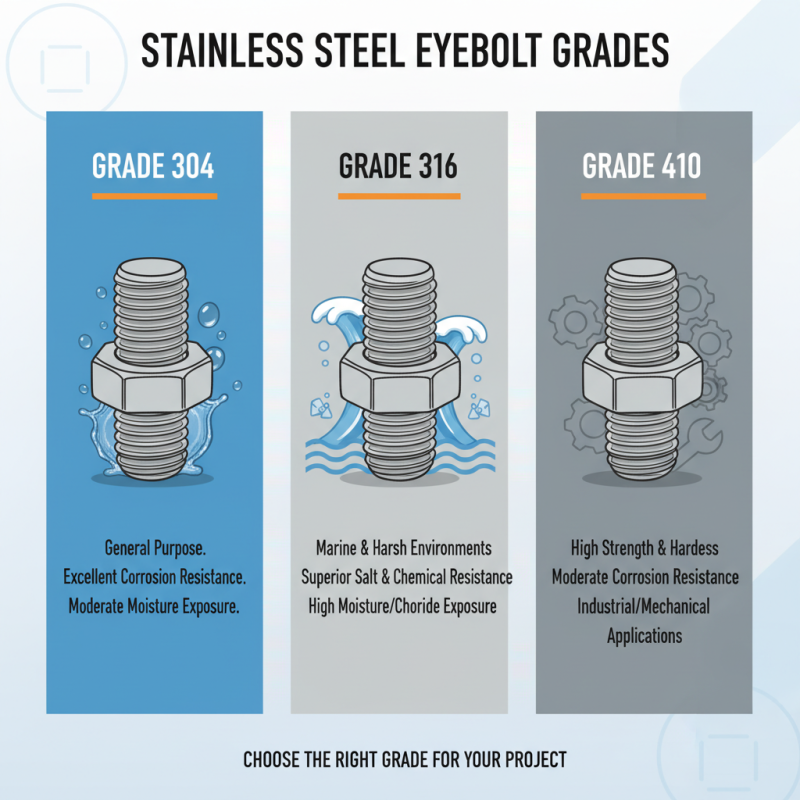
When selecting stainless steel eyebolts for your projects, understanding the different grades of stainless steel is crucial for ensuring optimal performance and longevity. The three primary grades of stainless steel used are 304, 316, and 410. Each grade has unique properties that make them suitable for specific applications. For example, grade 304 is commonly used due to its excellent corrosion resistance and strength, making it ideal for general purpose applications in environments where exposure to moisture is moderate.
On the other hand, grade 316 offers enhanced corrosion resistance, particularly against saltwater and acidic environments, making it the preferred choice for marine applications or where chemicals are present. This grade is particularly beneficial for eyebolts used in coastal areas or in the food industry, where hygiene and resistance to harsh cleaning agents are paramount. Conversely, grade 410, which is a martensitic stainless steel, although not as corrosion-resistant as the austenitic grades, offers exceptional strength and hardness, making it suitable for applications requiring high strength and wear resistance. Thus, choosing the right grade of stainless steel eyebolts is essential for the success of your projects, ensuring they meet the specific environmental demands and load requirements.
Load Ratings: How to Determine the Right Eyebolts for Your Needs
When selecting stainless steel eyebolts for your projects, understanding load ratings is essential to ensure safety and effectiveness. Load ratings indicate the maximum weight an eyebolt can handle under specific conditions, and they are typically categorized into two major types: safe working load (SWL) and ultimate load.
The SWL is the maximum load that should be applied to the eyebolt during normal use, while the ultimate load is the point at which the eyebolt will fail. To select the right eyebolt, you must carefully assess the weight of the load you intend to lift and include a safety factor, which is often recommended to be at least four times the intended load.
Additionally, it's important to consider the working environment of your project. Factors such as corrosion resistance, temperature, and the angle at which the load will be applied can affect the performance of stainless steel eyebolts. If the eyebolt is to be used in a harsh environment, choose a type of stainless steel with higher corrosion-resistant properties.
Moreover, ensure that the installation aligns with the load's direction; improperly aligned loads can significantly reduce the effective load capacity of the eyebolt. Overall, evaluating both the load ratings and environmental conditions will help in selecting the right stainless steel eyebolts for safe and reliable performance in your projects.
Corrosion Resistance: Why Material Composition Matters in Eyebolts
When selecting stainless steel eyebolts for your projects, understanding the importance of corrosion resistance is crucial. The material composition directly influences the strength and durability of the eyebolts in various environments. Stainless steel is typically an alloy of iron, carbon, and a minimum of 10.5% chromium, which grants it its corrosion-resistant properties. The chromium reacts with oxygen to form a passive layer of chromium oxide on the surface, effectively shielding the metal from moisture and corrosive substances, which is particularly beneficial in marine, industrial, and chemical settings.
However, not all stainless steel alloys are created equal. For example, 304 stainless steel is often used for general-purpose applications due to its resistance to corrosion in mild environments, but it may not perform well in harsher conditions, such as exposure to saltwater or high chloride environments. In these cases, opting for 316 stainless steel, which contains molybdenum, can provide enhanced corrosion resistance. Understanding these material properties ensures that you choose eyebolts that can withstand the specific conditions they will face, thus preserving the integrity and safety of your project.
Corrosion Resistance in Stainless Steel Eyebolts Based on Material Composition
Eye Shape and Size: Choosing the Right Design for Your Installations
When selecting the right stainless steel eyebolts for your projects, one of the most critical factors to consider is the eye shape and size. The design of the eye affects not only the strength and load-bearing capacity of the eyebolt but also its suitability for various applications.
According to recent industry reports, the standard round eye design is commonly used for general lifting and securing tasks, whereas a square or oval eye may be more advantageous for specific rigging applications, allowing for better alignment and reduced wear on ropes or cables.
In addition to the shape, the size of the eyebolt's eye is equally important. An appropriately sized eye facilitates easier attachment of hardware, reduces friction, and can enhance the overall efficiency of operations. A study conducted by the Fastener Quality Act (FQA) indicated that misfit sizes can lead to a significant decrease in load performance, sometimes by as much as 25%. Therefore, when deciding on the dimensions of your eyebolts, it's essential to consider the diameter of ropes or cables used in conjunction with the eyebolt, ensuring they fit snugly without being overly tight, which could lead to wear or failure under load.
Ultimately, understanding the specific requirements of your project will help in making informed choices about eyebolts. By taking into account both eye shape and size, along with the load ratings and material specifications, you can ensure the safety and reliability of your installations, thereby enhancing the overall efficiency of your operations.
Industry Standards and Certifications for Stainless Steel Eyebolts
When selecting stainless steel eyebolts for various projects, understanding industry standards and certifications is crucial to ensure quality and safety. One of the primary standards to consider is ASTM (American Society for Testing and Materials) specifications, which offer guidelines on the material properties and performance of stainless steel eyebolts. It's important to look for products that meet these standards, as they ensure durability and reliability under different load conditions. An ASTM A320 specification, for instance, outlines the required tensile strength and other critical mechanical properties for eyebolts used in low-temperature environments.
Additionally, certification from organizations such as the American National Standards Institute (ANSI) or the International Organization for Standardization (ISO) can further validate the quality of the eyebolts. ANSI certification ensures that the eyebolts conform to stringent safety and performance benchmarks, while ISO certification indicates adherence to international quality management systems. These certifications not only enhance the credibility of the eyebolts but also provide peace of mind that the products have undergone rigorous testing and evaluation, making them more suitable for demanding applications. Therefore, comprehending these standards and certifications is vital in selecting the right stainless steel eyebolts that meet the specific requirements of your projects.
How to Choose the Right Stainless Steel Eyebolts for Your Projects - Industry Standards and Certifications for Stainless Steel Eyebolts
| Dimension |
Material Grade |
Load Capacity (lbs) |
Corrosion Resistance |
Industry Standards |
| 1/4 inch |
304 |
600 |
Good |
ASTM A240 |
| 3/8 inch |
316 |
1,000 |
Excellent |
ASTM A276 |
| 1/2 inch |
304 |
1,600 |
Good |
ASTM A484 |
| 5/8 inch |
316 |
2,200 |
Excellent |
ASTM A193 |
| 3/4 inch |
304 |
3,000 |
Good |
ASTM A320 |
Best Practices for Installing and Maintaining Stainless Steel Eyebolts
When installing and maintaining stainless steel eyebolts, adhering to best practices is essential for ensuring safety and longevity. First, consider the load requirements of your specific project, as stainless steel eyebolts come in various grades and sizes, each designed to handle different weight capacities. According to a report from the American Society for Testing and Materials (ASTM), the tensile strength of stainless steel grades, such as 316, can exceed 80,000 psi, which makes it suitable for marine and industrial environments where corrosion resistance is critical. Ensuring that the eyebolts selected can handle the operational loads will significantly minimize the risk of failure.
Proper installation techniques are vital for maximizing the performance of stainless steel eyebolts. It is recommended to use the correct torque specifications when tightening eyebolts to avoid over-tightening, which can lead to material deformation and potential failure. Industry standards suggest using a calibrated torque wrench to achieve precise torque values, as this not only ensures a secure fit but also avoids the introduction of unnecessary stress on the eyebolts and the material they are mounted in. Furthermore, regular inspections should be conducted to check for signs of wear, corrosion, or loosening, as maintaining eye bolts in optimal condition can extend their service life and enhance overall project safety. Reports from industry professionals indicate that regular maintenance can improve the reliability of these components by up to 30%, emphasizing the importance of vigilance in their upkeep.
Comprehensive Guide to Factory-Supplied Tooth Bars and Stainless Steel Hexagon Head Bolts for Industrial Applications
When it comes to industrial applications, the selection of appropriate components is crucial for operational efficiency and durability. Two key products that often stand out in this realm are factory-supplied tooth bars and stainless steel hexagon head bolts. Tooth bars, engineered for heavy-duty usage, are typically used in various machinery and excavation tools to enhance digging performance and improve overall productivity. Their design often includes specialized teeth that optimize soil penetration, making them indispensable in construction and mining operations.
Stainless steel hexagon head bolts serve as reliable fasteners that complement the robust construction offered by tooth bars. These bolts provide superior strength and resistance to corrosion, ensuring longevity even in harsh environments. Their hexagonal heads allow for easy tightening and secure fastening, which is essential for maintaining the integrity of machinery and equipment under demanding conditions. In industrial settings, where downtime can be costly, the combination of durable tooth bars with high-quality stainless steel hexagon head bolts creates a resilient and efficient framework for various applications, from earthmoving tasks to heavy machinery assembly.
FAQS
: The type of stainless steel used in the eyebolts is critical, as it determines the eyebolts' corrosion resistance and suitability for the intended environment.
Marine-grade stainless steel, such as 316, is recommended for marine applications due to its excellent corrosion resistance against saltwater and acidic environments.
You should match the eyebolt's strength to the loads it will bear, considering the defined working load limit (WLL) and factors such as dynamic loads, angle of loading, and the construction material of the attachment point.
Grade 304 offers good corrosion resistance for general applications, while grade 316 provides enhanced resistance to saltwater and chemicals, making it ideal for marine and food industry applications.
Larger eyebolts can accommodate thicker ropes or cables, providing more versatility in various applications, which is essential for ensuring proper load management.
Grade 410 is a martensitic stainless steel that offers exceptional strength and hardness, making it suitable for applications requiring high wear resistance, although it is not as corrosion-resistant as the austenitic grades.
Exceeding the WLL can lead to catastrophic failures, making it vital to assess and adhere to the specified limits to ensure safety and performance.
Grade 304 is effective in general-purpose applications in environments where exposure to moisture is moderate, thanks to its excellent corrosion resistance and strength.
You should evaluate the environmental conditions, such as moisture levels and exposure to chemicals or saltwater, to ensure the selected eyebolts can withstand the specific demands of the application.
The angle of loading can affect the effective load capacity of the eyebolts, and it should be considered during selection to ensure safety and proper performance in your project.
Conclusion
When selecting Eyebolts Stainless Steel for your projects, several crucial factors come into play. Understanding the different grades of stainless steel is essential, as each grade offers distinct properties suitable for various applications. Additionally, assessing load ratings will help you determine which eyebolts are appropriate for your specific needs, ensuring safety and reliability in usage.
Corrosion resistance is another vital aspect influenced by material composition, significantly affecting the longevity of the eyebolts. The shape and size of the eye also play a role in the functionality of your installations. Adhering to industry standards and certifications is important to guarantee quality and performance. Lastly, implementing best practices for installation and maintenance will enhance the durability and effectiveness of your Eyebolts Stainless Steel, making your projects successful and secure.